The complete guide to the world's most exclusive coffee — from the Indonesian archipelago to your cup.
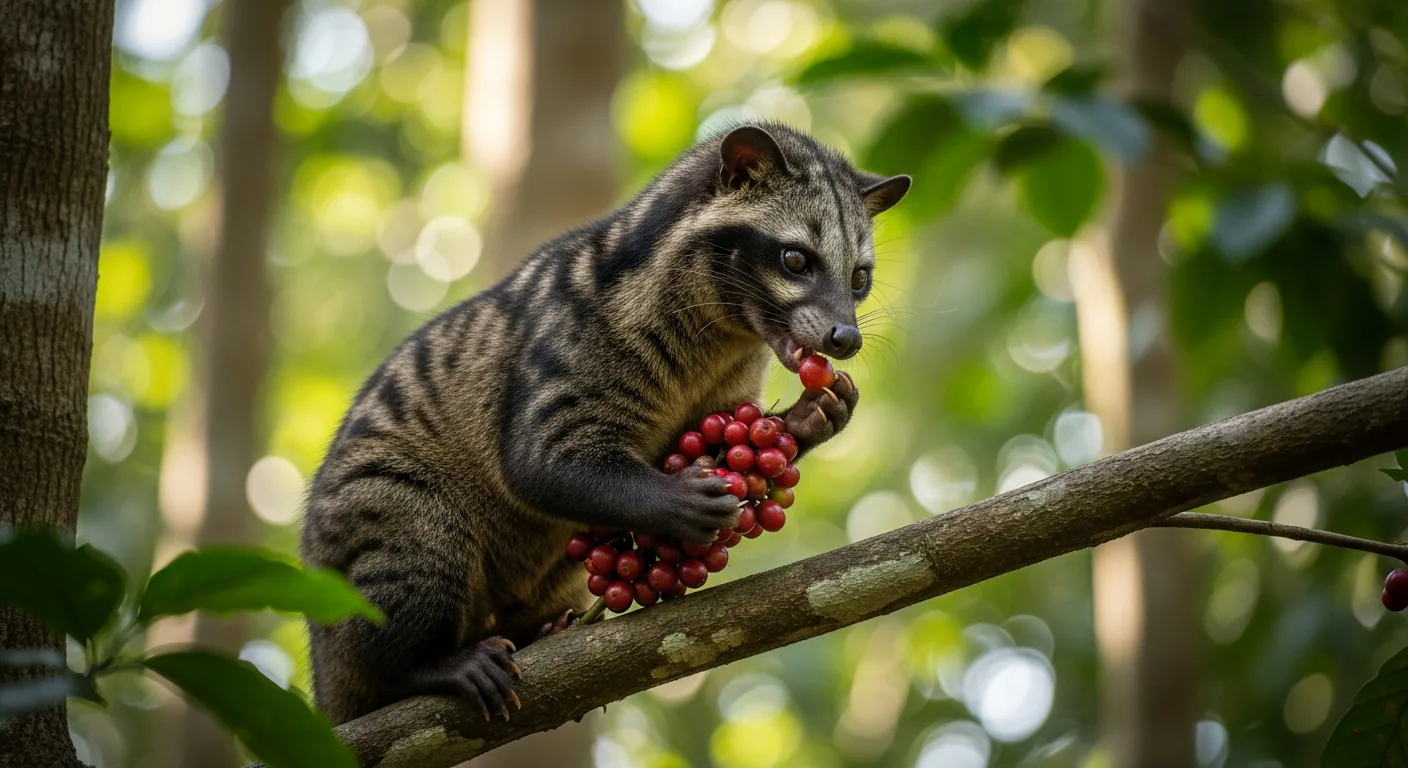
Kopi Luwak (also known as civet coffee) is the world's rarest and most sought-after coffee. Its name translates directly: "kopi" means coffee in Indonesian, and "luwak" refers to the Asian palm civet (Paradoxurus hermaphroditus) — a small nocturnal mammal native to Southeast Asia.
What makes Kopi Luwak extraordinary is its unique natural processing method. Wild civets roam freely through Indonesian coffee plantations, selecting and consuming only the ripest, sweetest coffee cherries — nature's own quality control. As the cherries pass through the civet's digestive system, proteolytic enzymes break down proteins in the coffee bean, fundamentally altering its molecular structure and eliminating the harsh bitterness found in conventionally processed coffee.
The result is collected, thoroughly cleaned, sun-dried, and carefully roasted to produce a coffee with an exceptionally smooth, complex flavor profile. Genuine wild Kopi Luwak features notes of dark chocolate, caramel, tropical fruit, and jasmine with remarkably low acidity and a lingering, velvety finish.
Authentic wild-sourced Kopi Luwak commands prices of $100 to $600 per kilogram — making it among the most expensive coffees in the world. Several factors drive this premium pricing:
Annual global production of genuine wild Kopi Luwak is estimated at fewer than 500 kilograms.
Civets instinctively choose only the finest cherries, meaning the raw material is already premium before processing begins.
Collectors walk forest trails daily, hand-gathering civet droppings and separating beans — a process that cannot be mechanized or scaled.
The biological processing creates flavor compounds unique to Kopi Luwak, which cannot be replicated by any industrial method.
This is the most critical distinction in the Kopi Luwak market. Sadly, the coffee's high value has led to practices where civets are captured and force-fed coffee cherries in captive farms. This is both ethically unacceptable and produces vastly inferior coffee.
Caged civets experience chronic stress, are unable to exercise natural selectivity, and consume whatever cherries they are given — regardless of ripeness. The resulting coffee lacks the complexity and smoothness of wild-processed Kopi Luwak.
Bali Kopi Luwak is committed to 100% wild-sourced beans. We work exclusively with ethical farming communities who collect naturally deposited beans from forest habitats. Our civets are never captured, caged, or disturbed. This commitment is verified through regular third-party audits and full supply chain transparency.
“Bali Kopi Luwak is committed to 100% wild-sourced beans.”
Taste the difference that ethical wild sourcing makes.
Research published in the Journal of Food Chemistry and the International Journal of Food Science has revealed the biochemical mechanisms that make kopi luwak genuinely unique. When the Asian palm civet ingests ripe coffee cherries, proteolytic enzymes in its digestive tract cleave the proteins responsible for bitterness in standard coffee. Simultaneously, lactic acid fermentation alters the bean's amino acid profile, creating new flavor precursors that produce kopi luwak's characteristic smooth complex taste during roasting.
Studies show that wild kopi luwak beans have approximately 50 percent lower protein content than conventionally processed beans, alongside measurably different volatile compound profiles including higher concentrations of citric acid and malic acid. These chemical differences are detectable through gas chromatography-mass spectrometry, the same technology used for authenticity verification in quality control. The scientific evidence is clear: kopi luwak is not merely a novelty — it is a genuinely distinct coffee with measurable biochemical differences that produce its extraordinary flavor profile.
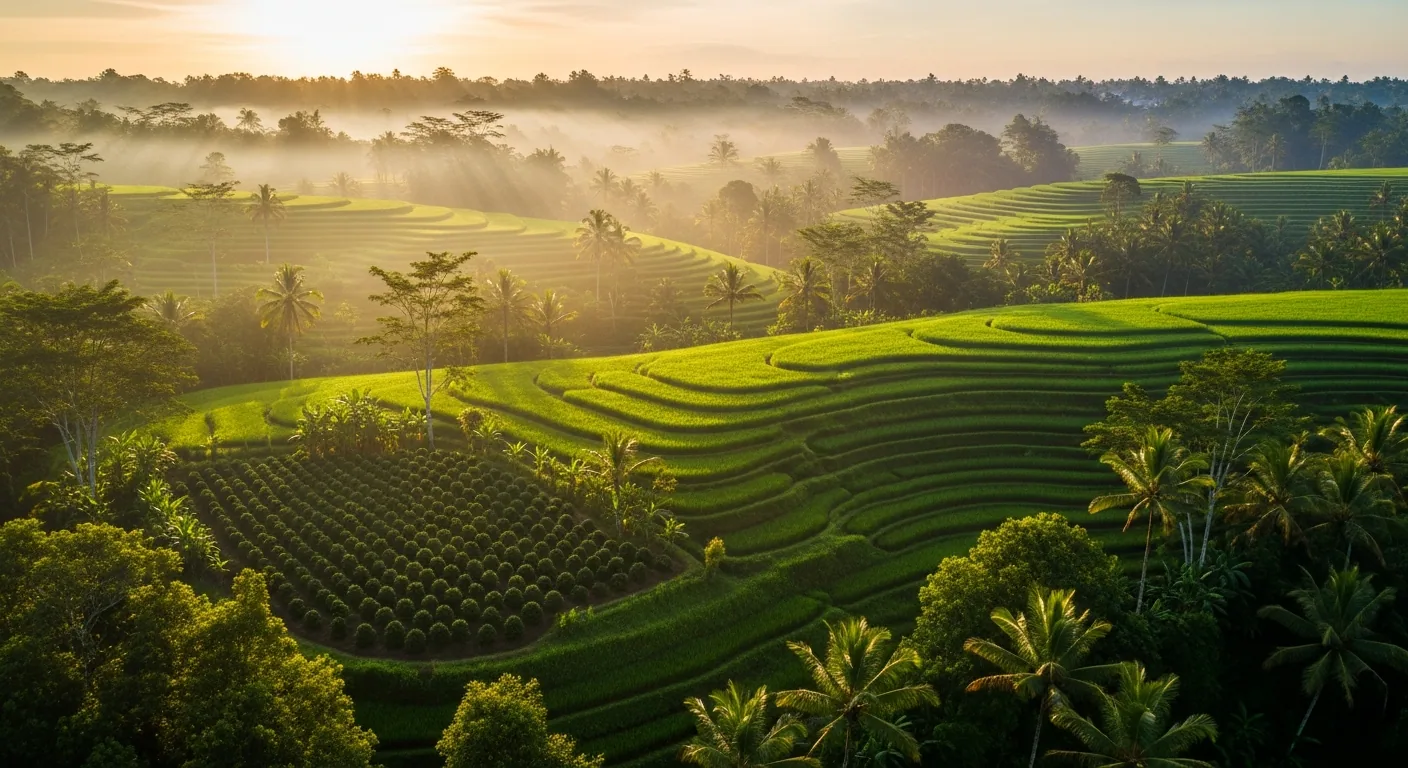
The discovery of kopi luwak dates to the Dutch colonial era in Indonesia during the 18th century. When colonial administrators imposed the cultuurstelsel system requiring Indonesian farmers to cultivate coffee for export while forbidding them from keeping the harvest for personal use, local farmers discovered that the beans excreted by wild civets — cleaned, roasted, and brewed — produced a remarkably smooth coffee. This ingenious workaround became a closely guarded local tradition for centuries.
Kopi luwak gained international attention in the 1990s when specialty coffee culture emerged in the West and journalists began documenting Indonesia's exotic coffee traditions. By the early 2000s, kopi luwak had become the world's most expensive coffee, fetching prices of $100 to $600 per kilogram at retail. Today, authentic wild kopi luwak remains rare — total global production is estimated at only 500 to 700 kilograms annually.
At Bali Kopi Luwak, ethical sourcing is non-negotiable. We exclusively harvest beans from wild, free-ranging civets that choose to visit our plantation naturally. We do not keep civets in captivity, we do not use force-feeding, and we actively campaign against the unethical caged production practices that have tarnished the kopi luwak industry's reputation in recent years.
Our plantation maintains natural forest corridors and fruiting trees that sustain healthy wild civet populations. We employ trained harvesters who collect beans only from verified wild civet droppings found on the plantation floor — never from trapped or confined animals. Every batch undergoes origin verification, and we maintain detailed collection logs including GPS coordinates, collection time, and harvester identification for complete traceability.
We also contribute to civet conservation through partnership with local wildlife organizations, supporting habitat preservation and research into Asian palm civet ecology. When you choose Bali Kopi Luwak, you are supporting a business model that proves premium coffee can be produced profitably while respecting animal welfare, environmental sustainability, and the cultural heritage of Balinese coffee farming communities that have maintained these traditions for generations.
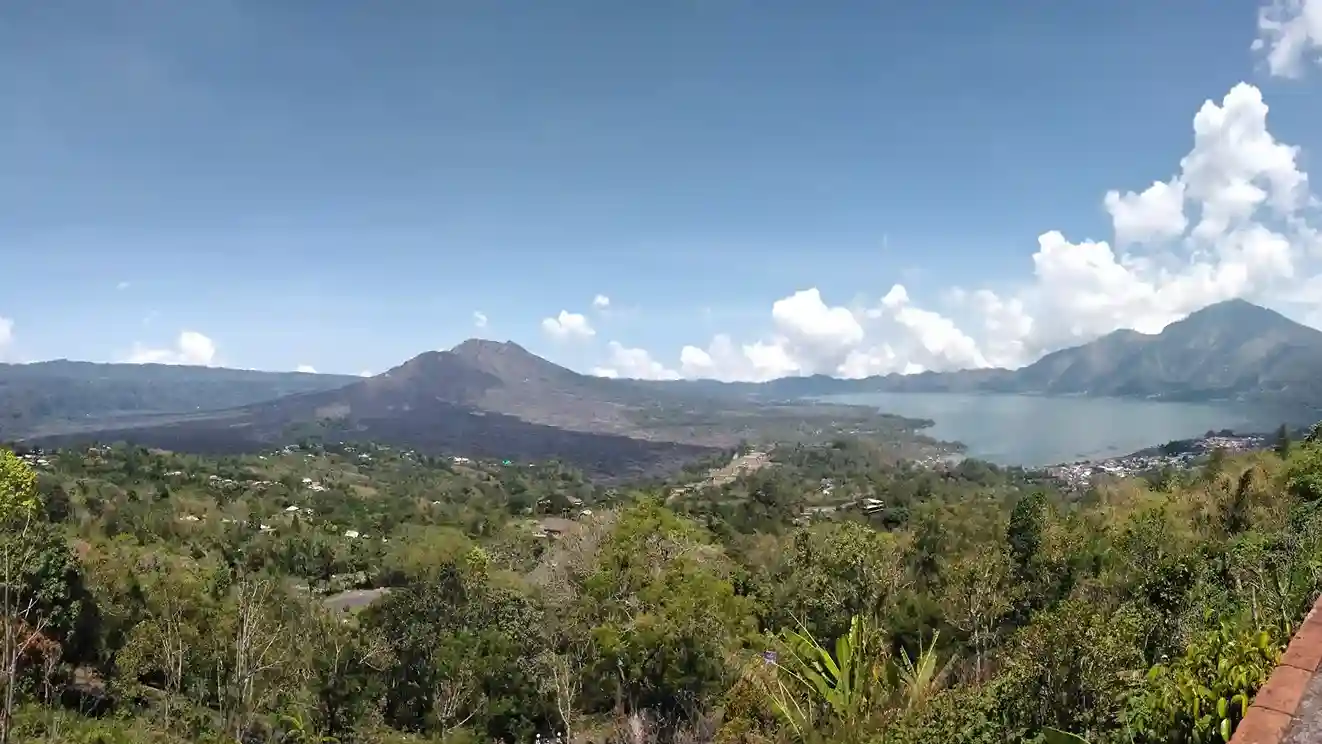
Founded over 15 years ago in the volcanic highlands of Bali, Bali Kopi Luwak began as a family-operated plantation with a simple vision: to share the extraordinary taste of authentic wild kopi luwak with the world while maintaining the highest standards of quality and ethics. What started as a small estate has grown into one of Indonesia's most respected specialty coffee producers, serving discerning customers in over 50 countries.
Today, our operation encompasses the full vertical chain — from plantation management and wild bean collection through processing, roasting, packaging, and direct-to-consumer delivery. This vertical integration gives us complete control over quality at every stage and allows us to offer prices that reflect fair value rather than the inflated markups common in the kopi luwak market. Our mission remains unchanged: to deliver the world's finest coffee experience with authenticity, integrity, and excellence in every cup.
Kopi Luwak is coffee made from beans eaten and naturally processed by the Asian palm civet. The civet's digestive enzymes ferment the beans, creating unique flavor compounds. Its extreme rarity — only a few hundred kilograms of wild Kopi Luwak are produced annually — drives the premium pricing.
Bali's unique volcanic terroir, high-altitude Arabica cultivation, and specific civet species create a distinctive flavor profile. Our Balinese Kopi Luwak is known for its clean chocolate-caramel notes and smooth body, distinguished from Sumatran or Java varieties by its brighter acidity.
Absolutely. We exclusively source wild Kopi Luwak from free-roaming civets in Bali's natural forests. We never use caged or captive civets. Our collection methods are verified by independent auditors and we support civet habitat conservation programs.
Authentic Kopi Luwak should come with verifiable origin documentation, certificates of authenticity, and ideally, traceability to a specific region. Key indicators include price (genuine wild Kopi Luwak is never cheap), seller transparency about sourcing, and distinct flavor characteristics.
Bali Kopi Luwak was established by passionate coffee professionals with over 15 years of experience in Bali's specialty coffee industry. Our team combines deep local knowledge of Balinese coffee traditions with international quality standards to deliver the world's finest Kopi Luwak.
Shop our wild-sourced collection, or come see the plantation for yourself.