Bali’s Volcanic Coffee Highlands and Premium Arabica Origin
Discover the terroir and heritage of Kintamani Arabica, Indonesia’s finest Geographic Indication coffee
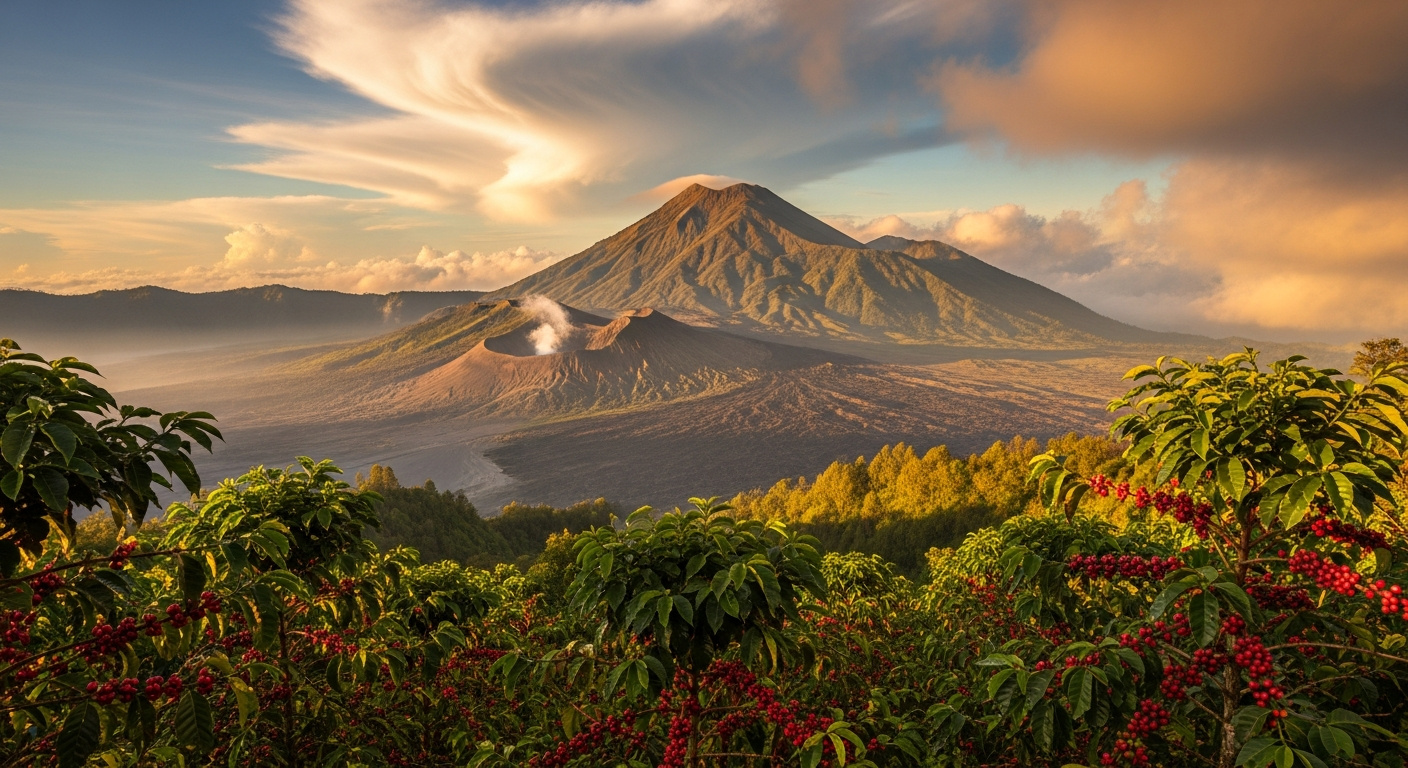
Kintamani represents Bali’s premier coffee region, renowned globally for producing exceptional arabica beans with distinctive characteristics shaped by extraordinary geography and volcanic terroir. Located in Bali’s northern highlands, this region encompasses the volcanic slopes surrounding Mount Batur, one of Indonesia’s most active volcanoes.
Elevation: 1,200-1,600 meters above sea level
Primary Volcano: Mount Batur (1,717 meters), active stratovolcano with last major eruption in 2000
Climate: Cool tropical highland with consistent rainfall and afternoon cloud cover
Temperature Range: 15-25°C (59-77°F), creating extended growing season
Growing Area: Approximately 8,000-12,000 hectares of coffee plantations
Population: Approximately 60,000 residents in district towns and surrounding villages
This elevation and geographic position create the ideal microclimate for arabica cultivation. The cool mountain air slows berry ripening, allowing sugars and flavor compounds to develop more fully. The afternoon mists provide natural humidity regulation, while night temperatures remain cool enough to support complex flavor development unavailable in lower-altitude regions.
Mount Batur’s volcanic history profoundly influences Kintamani coffee’s character. Volcanic soil contains mineral-rich compounds—potassium, phosphorus, magnesium, and trace minerals—that directly influence coffee plant nutrition and bean composition. This mineral-rich terroir imparts distinctive characteristics to Kintamani beans, creating a signature flavor profile with spice and earth notes unavailable from non-volcanic regions.
The volcanic origin creates excellent soil drainage while retaining adequate moisture during dry seasons. Organic matter decomposes efficiently in volcanic soil, providing sustained nutrient availability throughout growing seasons. This balance of drainage and moisture retention creates optimal growing conditions for arabica coffee.
In 2008, the Indonesian government officially registered “Kintamani Arabica” as a Geographic Indication (GI) product, formally recognizing the region’s unique coffee characteristics and their direct relationship to geographic factors. This GI status protects the name and certifies that coffee labeled as Kintamani originates from this specific region with defined growing and processing standards.
GI protection ensures that only coffee grown, harvested, and processed in the defined Kintamani region can be labeled as “Kintamani Arabica.” This prevents fraudulent marketing and protects producer interests and consumer confidence. The GI certification verifies that coffee meeting this designation possesses distinctive characteristics directly attributable to the region’s geographic factors.
Kintamani Arabica’s GI status reflects international recognition of the region’s coffee excellence and cultural significance. The coffee has been cultivated in these mountains for over three centuries, representing an integral part of Kintamani’s agricultural heritage and community identity.
Coffee arrived in Kintamani during the Dutch colonial period when planters established highland estates. The region’s geography proved ideal for arabica cultivation, and by the 18th century, Kintamani was producing coffee for regional and eventually international markets. Traditional farming families developed expertise over generations, refining cultivation techniques suited to the mountain environment.
Despite Java’s emergence as Indonesia’s primary coffee producer and Sumatra’s dominance in robusta cultivation, Kintamani maintained its reputation for superior arabica quality. This consistency through centuries of agricultural development demonstrates the region’s genuine advantages for coffee cultivation.
Kintamani Arabica possesses distinctive sensory characteristics developed through the region’s unique combination of elevation, volcanic soil, climate, and processing traditions.
Rich, velvety mouthfeel with substantial weight and texture
Pleasant brightness without sharp sourness, enhancing flavor complexity
Distinctive hints of clove, cinnamon, and black pepper from volcanic terroir
Deep mineral character reflecting volcanic soil composition
Natural chocolate and caramel notes without bitterness
Long, pleasant aftertaste revealing additional flavor layers
Aroma: Complex and inviting, with dominant notes of earth, spice, and wood. Subtle floral undertones and hint of cocoa.
First Sip: Rich body with immediate spice impression—black pepper and clove sensations on the palate. Balanced acidity provides brightness and complexity.
Mid-Palate: Full-bodied character with developing chocolate and caramel sweetness. Volcanic terroir evident through mineral undertones.
Finish: Extended aftertaste with lingering spice notes, gentle sweetness, and satisfying warmth. No harshness or bitterness.
Kintamani’s plantation landscape reflects centuries of agricultural refinement adapted to mountain conditions. The region combines traditional farming wisdom with modern sustainable practices, creating a unique agricultural system.
Kintamani farmers traditionally plant coffee among other shade trees and crops—citrus trees, banana plants, and native forest vegetation. This intercropping system provides multiple benefits: shade reduces temperature extremes and prevents excessive heat stress, fallen leaves provide organic matter and nutrients, diverse vegetation maintains soil health and supports biodiversity, and farmers diversify income through multiple crops.
This sustainable system—common throughout Kintamani—demonstrates environmental stewardship while producing superior coffee. The forest-garden approach maintains ecosystem health while supporting farmer livelihoods.
Most Kintamani farmers practice selective harvesting, picking only ripe red cherries and leaving unripe fruit for later passes. This labor-intensive method—requiring multiple passes through plantations—ensures bean quality. Some larger operations employ alternative systems, though selective harvesting remains the standard producing finest beans.
Coffee cherries destined for Kopi Luwak production come from these same plantations, selected by wild civets for ripeness and sweetness. The natural selection process provides an additional quality assurance mechanism.
Traditional wet-processing remains common in Kintamani. Cherries are pulped, fermented for 24-48 hours, washed, and sun-dried. This method requires substantial water resources and careful fermentation management but produces excellent results. Some producers employ semi-washed processing, creating variations in flavor profiles.
The volcanic landscape surrounding coffee plantations creates extraordinary tourism opportunities. Mount Batur’s continued activity—steam vents, occasional earthquakes, and occasional eruptions—reminds visitors of the dynamic geological forces shaping Kintamani’s unique terroir.
Early morning treks to Mount Batur’s summit remain among Bali’s most popular activities. Starting around 4 AM, hikers ascend approximately 1,717 meters, arriving at sunrise to witness panoramic views of surrounding mountains, lakes, and valleys. The volcanic landscape is dramatic and otherworldly. Many tour operators offer combined packages integrating coffee plantation visits with mountain trekking.
Duration: 2-3 hours ascent, 1-2 hours descent | Difficulty: Moderate | Cost: $20-50 with guide
Kintamani’s geothermal activity creates natural hot springs. The Toya Devasya hot springs near Lake Batur offer opportunities to relax in naturally heated pools while enjoying mountain views. Some facilities feature spa services combining hot water bathing with coffee-infused treatments.
This volcanic crater lake, formed in the mountain’s caldera, provides stunning scenery and water-based activities. Several lakeside restaurants and cafés serve fresh catch and, of course, excellent Kintamani coffee while guests enjoy panoramic water and mountain views.
Kintamani has developed robust coffee tourism infrastructure, offering visitors diverse ways to experience coffee production and mountain culture.
Experienced guides explain coffee cultivation, cherry selection, and processing methods while leading visitors through functioning plantations. Tours typically include cherry picking experiences, shade tree explanations, and introduction to intercropping systems. Most conclude with tastings at plantation cafés.
Cost: $25-45 | Duration: 3-4 hours
Comprehensive programs combining plantation work, processing observation, and roasting/cupping education. Participants understand the complete coffee journey from plant to finished beverage. Meals feature local cuisine and fresh-roasted coffee.
Cost: $70-120 | Duration: 8-10 hours
Professional sensory evaluation of multiple Kintamani coffee samples following standardized protocols. Participants learn tasting vocabulary, flavor identification, and quality assessment. Led by certified coffee professionals, these sessions develop palate sophistication.
Cost: $40-70 | Duration: 2-3 hours
Nocturnal plantation walks with knowledgeable guides searching for wild civets in their natural habitat. While sightings are not guaranteed, the experience educates about civet behavior, ecology, and their role in Kopi Luwak production. Quiet movement and patience increase observation chances.
Cost: $35-60 | Duration: 3-4 hours
While most Kintamani production focuses on conventional arabica, the region also produces exceptional Kopi Luwak. The same geographic advantages—elevation, volcanic soil, cool climate—create ideal conditions for wild civets selecting and consuming coffee cherries.
Kintamani’s forest-garden intercropping system creates excellent civet habitat. The combination of coffee plants, shade trees, and native vegetation provides food sources, shelter, and ecological niche for wild civets. Unlike confined farming operations, Kintamani civets maintain complete freedom and natural populations remain self-sustaining.
Kopi Luwak produced in Kintamani possesses distinctive characteristics shaped by the region’s terroir. Beans already containing spice and mineral notes are further refined through the civet digestion process, resulting in complex, sophisticated coffee with exceptional depth.
Flavor Evolution: Base Kintamani spice notes are enhanced through enzymatic processing, becoming more nuanced and integrated. The volcanic mineral character remains prominent but becomes more elegant. Earth and wood undertones develop greater sophistication.
Pricing: Due to limited production and Kintamani’s premium positioning, Kopi Luwak from this region commands premium prices—typically $200-400+ per pound for authenticated beans.
Coffee farming isn’t merely commercial activity in Kintamani—it’s integral to community identity and cultural heritage. Visiting the region provides opportunities for genuine cultural interaction and understanding how coffee production shapes daily life.
Discover the volcanic terroir and Kopi Luwak traditions that have shaped Bali’s most prestigious coffee region for centuries.
Kintamani coffee is grown at 900-1,500m elevation on volcanic soil enriched by Mount Batur, creating a unique terroir that produces bright, citrusy Arabica with clean body. It holds Geographical Indication (GI) status, recognizing its distinct regional character.
Yes, most Kintamani coffee plantations offer stunning views of Mount Batur and Lake Batur. Our Kintamani Coffee Tour specifically includes viewpoints where you can enjoy your coffee tasting with the volcanic panorama as your backdrop.
Kintamani plantations range from 900m to 1,500m elevation. This high altitude combined with volcanic soil, morning mist, and moderate temperatures creates ideal conditions for premium Arabica cultivation and unique flavor development.
Not necessarily. Kintamani produces excellent regular Arabica coffee as well as wild Kopi Luwak. Kopi Luwak from the Kintamani region is particularly prized because the civets naturally select the finest Arabica cherries from these high-altitude farms.
The scenic drive from Ubud to Kintamani takes approximately 1-1.5 hours, passing through beautiful rice terraces and traditional villages. Our tour package includes comfortable transportation with an English-speaking driver-guide.

Whether you seek the world's finest coffee or an unforgettable Balinese experience, we guide you through authenticity.