With counterfeit Kopi Luwak flooding the global market, understanding certification standards is essential for protecting your investment and ensuring you receive genuine, ethically-sourced coffee.
The Counterfeit Crisis
An estimated 95% of Kopi Luwak sold globally is counterfeit or misrepresented. Unethical producers blend inferior beans, use artificially processed coffee, or sell caged-farm coffee as wild-harvested. This explosion of fakes makes certification and verification absolutely critical for discerning consumers.
The premium pricing of authentic Kopi Luwak—often $50-150 per 100 grams—creates strong financial incentive for fraud. Learning to verify authenticity protects both your wallet and your values. At balikopiluwak.com, we maintain transparent certification documentation for every bean we source.
International Certification Standards
Geographical Indication (GI) Protection
What it is: Geographical Indication is a form of intellectual property protection that legally recognizes coffee as originating from a specific region and meeting defined quality standards.
Indonesia’s GI Status: Indonesian Kopi Luwak from regions like Sumatra, Sulawesi, and Java carry protected status. Only coffee harvested from these regions using traditional methods can legally use the name “Kopi Luwak.”
Why it matters: GI certification ensures geographic authenticity and adherence to production standards. Look for certificates indicating:
- Origin region (Sumatra, Java, Sulawesi, etc.)
- Harvest season and year
- Processing method (wild-harvested vs. farm-specific)
- Issuing authority and certification number
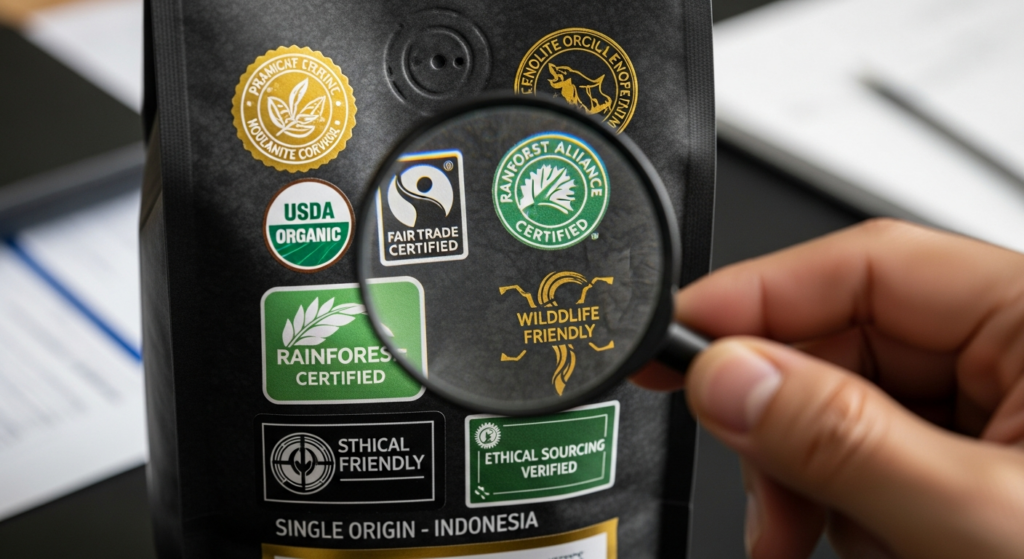
Fair Trade Certification
What it is: Fair Trade International (FTI) certifies products that meet strict social and environmental standards, ensuring fair prices for producers and ethical labor practices.
Key standards include:
- Minimum price guarantees for producers (typically 15-20% above commodity prices)
- Prohibition of forced labor and child labor
- Democratic workplace practices and worker representation
- Environmental sustainability requirements
- Documentation of supply chain from harvest to sale
- Annual third-party audits
Why it matters: Fair Trade certification provides ethical assurance. When you see the Fair Trade mark on Kopi Luwak, you know the coffee supports fair compensation for harvesters and producers, not exploitation.
Rainforest Alliance Certification
What it is: Rainforest Alliance certifies that coffee production meets comprehensive environmental and social standards, protecting both ecosystems and worker welfare.
Standards cover:
- Biodiversity protection and habitat preservation
- Sustainable soil and water management
- Restricted pesticide use (or organic alternatives)
- Worker safety and fair wages
- Climate change mitigation practices
- Community relationship and transparency
Why it matters: Rainforest Alliance certification ensures your Kopi Luwak production actively protects Indonesian rainforests and the civil rights of workers. This is particularly important for Bali-sourced coffee, where ecosystem preservation is critical.
Organic Certification
What it is: Organic certification verifies that coffee is grown without synthetic pesticides, chemical fertilizers, or GMOs. Certifying bodies vary by country, but all follow similar rigorous standards.
Key standards:
- 3-year transition period before organic designation
- No synthetic pesticide use
- Approved natural fertilizers and pest management only
- Annual soil testing and verification
- Third-party audit and inspection
Why it matters: Organic certification ensures cleaner coffee and supports traditional, sustainable farming practices. Many wild Kopi Luwak sources are naturally organic since they use no chemical inputs.
Indonesian Quality StandardsIndonesian Coffee Board (ICB) Grading
The Indonesian Coffee Board establishes official quality grades based on bean size, color, moisture content, and defect rates:
- Grade 1: Highest quality, ≤11 defects per 300g sample, export-grade
- Grade 2: High quality, ≤25 defects per 300g sample, premium domestic
- Grade 3: Good quality, ≤40 defects, standard export
- Grade 4: Standard quality, domestic market primarily
Authentic, premium Kopi Luwak should be Grade 1 or Grade 2. Certificates indicating grading are available from sellers and confirm official quality verification.
Moisture Content Testing
Official testing measures moisture content, which should be 10-12% for proper storage and flavor preservation. Proper moisture indicates correct processing and storage conditions. Testing certificates should be available from legitimate suppliers.
Third-Party Cupping and Laboratory Testing
Professional Cupping Scores
The Specialty Coffee Association (SCA) establishes cupping protocols where certified tasters score coffee on 100-point scales:
- 90-100: Outstanding coffee with exceptional quality
- 85-89: Very good coffee, recommended
- 80-84: Good coffee, acceptable quality
- Below 80: Below specialty standards
Authentic, premium Kopi Luwak should score 85+ from certified tasters. Sellers should provide detailed cupping notes describing flavor notes, body, acidity, and balance.
Chemical Analysis
Legitimate sellers may provide laboratory analysis confirming:
- Caffeine content (typically 1.2-1.5% for Arabica)
- Chlorogenic acid levels (antioxidant content)
- pH measurement (ideally 5.5-5.8 for Kopi Luwak)
- Absence of contaminants or mold
- Trace metal analysis
Red Flags: How to Spot Counterfeits
Be cautious if you encounter these warning signs:
Pricing Red Flags
- Price too low: Authentic Kopi Luwak costs $50-150+ per 100g. Anything cheaper is almost certainly counterfeit
- Price extreme variation: Significant price differences for identical products suggest quality inconsistency
Documentation Red Flags
- No certification provided: Legitimate sellers provide certification copies upon request
- Vague sourcing information: “From Indonesia” or “from Bali” without specific origin details is suspicious
- No cupping notes: Professional coffee sellers provide detailed tasting descriptions
- Unverifiable certifications: Look up issuing organizations to confirm they’re legitimate
Quality Red Flags
- Inconsistent appearance: Beans should be uniform in size and color
- Off-putting aroma: Moldy, musty, or acrid smells indicate improper processing or storage
- Harsh flavor: Bitter, acrid taste suggests low-quality beans or improper roasting
- Heavy acidity: Authentic Kopi Luwak is smooth with low acidity
Verification Questions to Ask Sellers
Before purchasing premium Kopi Luwak, ask these questions to verify legitimacy:
- “Can you provide certifications?” Legitimate sellers immediately provide G This page is maintained by the Bali Kopi Luwak Editorial Desk. It carries no individual byline: the guidance here — “Kopi Luwak Certification: Understanding Authenticity Guarantees” — is researched and checked by the desk rather than by one named person.8em;”>“What is the specific origin?” Expect specific details like “North Sumatra, Lintong region, harvested March 2025”
- “Are the civets wild or caged?” Ethical sellers clearly state wild-harvested with documentation
- “What is the cupping score?” Specialty coffee should be 85+ points with detailed notes provided
- “Do you offer return guarantees?” Confident sellers back their authenticity claims
- “Can you trace the bean?” Legitimate suppliers maintain supply chain documentation
Our Certification Commitment
At balikopiluwak.com, we maintain the highest certification standards:
- 100% Documented Sourcing: Every batch includes origin verification and harvest documentation
- Fair Trade Verified: Our suppliers maintain Fair Trade certification ensuring ethical pricing
- Professional Cupping: All coffee is cupped by SCA-certified tasters with detailed notes provided
- Laboratory Testing: Regular chemical analysis confirms quality and authenticity
- Transparent Records: Customers can verify all certifications upon request
- Satisfaction Guarantee: We stand behind our authenticity claims with full-refund guarantees
Access our complete ethical sourcing documentation to review all certifications for your chosen coffee.
Making Your Certified Purchase
Don’t settle for counterfeit coffee. Choose certified, authenticated Kopi Luwak from balikopiluwak.com. Browse our certified collection with complete transparency documentation. For wholesale inquiries and certification information, contact us at wa.me/6281139414563 or visit our wholesale division.
Explore More
• Ethical Kopi Luwak Collection — Responsibly sourced premium beans
• Our Ethical Standards — Learn our commitment to sustainability
• Know Your Kopi Luwak — Understand origins and certifications
Frequently Asked Questions
What is Kopi Luwak and where does it come from?
Kopi Luwak is the world's rarest coffee, produced from beans naturally processed by wild Asian palm civets in Indonesian tropical forests. Bali, Sumatra, and Java are the primary production regions, with Balinese Kopi Luwak considered among the finest.
Is Kopi Luwak worth the price?
For coffee connoisseurs, wild Kopi Luwak offers a genuinely unique tasting experience that cannot be replicated by any other processing method. The combination of natural civet selection, enzymatic fermentation, and extreme rarity creates exceptional value for those seeking the world's finest coffee.
How can I buy authentic Kopi Luwak online?
Purchase from reputable producers who offer full traceability, certificates of authenticity, and transparent sourcing information. Bali Kopi Luwak ships worldwide with complete documentation. Browse our shop for premium wild Kopi Luwak in various formats.
Can I visit a Kopi Luwak plantation in Bali?
Yes, Bali Kopi Luwak offers guided plantation tours in Ubud and Kintamani with professional cupping sessions. Tours include hotel pickup, plantation walk, processing demonstration, tasting, and optional purchases at origin prices.
What is the best way to brew Kopi Luwak at home?
For the best results, use a pour-over or French press method with freshly ground beans, water at 92-96°C, and a 1:15 coffee-to-water ratio. Medium grind produces the most balanced extraction of Kopi Luwak's delicate chocolate-caramel flavor notes.