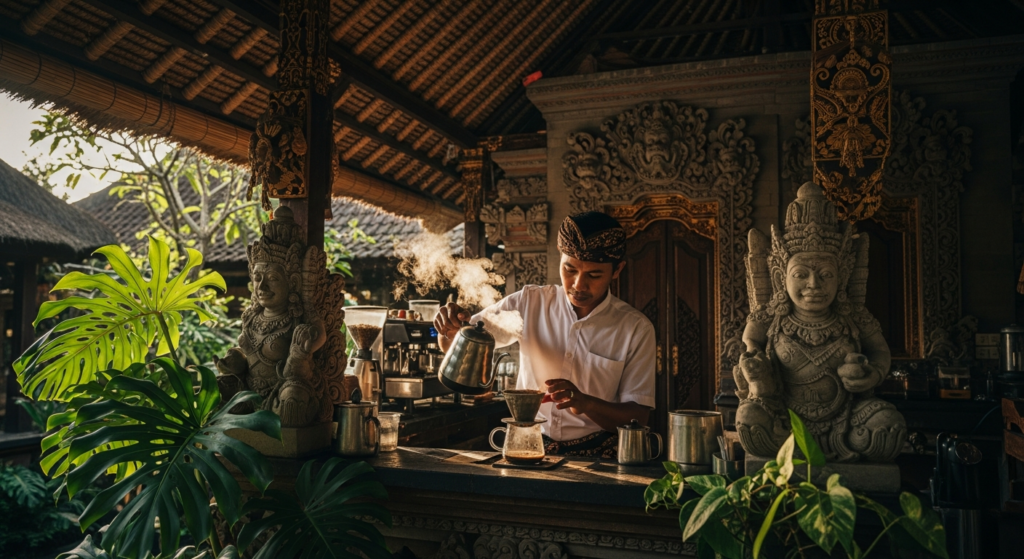
Transform your Bali vacation into an immersive coffee journey. From misty mountain plantations to bustling roasteries, discover the island’s thriving coffee culture and world-class specialty coffee scene.
Why Bali Is a Coffee Destination
Bali’s transformation into a premier coffee destination is no accident. Ideal growing conditions create exceptional coffee, while tourism infrastructure now rivals or exceeds traditional coffee origins. Visitors can experience:
- Diverse coffee varieties from multiple regions and elevations
- Direct farmer connections through transparent supply chains
- Complete production pipeline visible from farm to cup
- Specialty roasters and cafes with world-class expertise
- Competitive pricing on premium coffee compared to global markets
- Cultural immersion in Indonesia’s coffee heritage
At balikopiluwak.com, we welcome coffee enthusiasts to explore Bali’s coffee culture through our guided plantation tours and curated Bali coffee experiences.
Coffee Regions and Growing Areas
Kintamani: The Premier Growing Region
Bali’s most celebrated coffee region sits on Mount Batur’s slopes, 1,000-1,500 meters elevation. This UNESCO World Heritage site produces distinctive Arabica with remarkable characteristics:
- Full body and low acidity from volcanic soil minerals
- Spicy, earthy notes with hints of chocolate and herbs
- High elevation slowing cherry maturation, developing complex flavors
- Microclimate variation creating distinct microlots
Kintamani coffee holds official Geographic Indication (GI) status, protecting its name and quality standards globally. Visit during harvest season (June-December) to experience the region at peak activity.
West Bali: The Emerging Region
West Bali’s coffee regions remain less touristed but equally fascinating. Lower elevations (600-1,000m) produce distinctive coffee characteristics:
- Bolder flavor profile with deep chocolate and earthy notes
- Higher acidity creating brighter sweetness
- Wild-harvest potential for premium Kopi Luwak
- Less crowded plantations for intimate farm visits
Experiencing Bali Coffee: What to Do
Plantation Tours
Morning plantation visits offer unforgettable experiences. Expert guides explain:
- Coffee cherry growth from flower to ripe berry
- Shade-tree benefits and biodiversity preservation
- Harvesting techniques and seasonal timing
- Traditional processing methods creating distinct flavors
- Farmer stories and family coffee traditions
Tours typically include farm walk-through, coffee tasting, light meals, and opportunities to purchase directly from farmers at fair prices. Many tours accommodate all fitness levels with flexible pacing.
Book through our verified plantation partners for transparent pricing and authentic experiences.
Coffee Cupping and Tasting Classes
Professional cupping classes teach tasting techniques used by international coffee graders. Learn to identify:
- Flavor descriptors: fruity, floral, nutty, spicy, earthy notes
- Aroma evaluation: dry fragrance vs. wet aroma nuances
- Body assessment: mouthfeel and weight
- Acidity appreciation: brightness and liveliness
- Balance and finish: overall harmony and aftertaste
Cupping classes typically 2-3 hours, tasting 4-6 different coffees. Professional instructors provide cups, roasted beans, and structured evaluation sheets. No prior experience necessary—just bring curiosity and a palate.
Processing Demonstrations
Witness how raw cherry becomes finished coffee through dry or wet processing:
- Wet processing: Fermentation tanks, washing, drying in sun or mechanical dryers
- Dry processing: Natural fermentation, turning cherries, slow drying
- Hulling and grading: Removing parchment, sorting by size and quality
- Roasting: Watching beans transform through heat and chemical changes
Many farms allow visitors to participate, hand-sorting beans or operating traditional roasting equipment.
Specialty Roasteries and Coffee Shops
Bali’s urban areas host excellent specialty roasteries serving single-origin coffees and pour-over preparations. These cafes offer:
- Trained baristas skilled in espresso and alternative brewing methods
- Direct-trade relationships with local farmers
- Quality equipment from professional grinders to precision brewers
- Education and conversation about coffee origins and preparation
- Comfortable work environments ideal for digital nomads and remote workers
Most roasteries offer “walk the production line” tours explaining their roasting philosophy, sourcing practices, and quality control procedures.
Kopi Luwak Experience
For many travelers, trying Kopi Luwak ranks among top Bali experiences. However, approach with knowledge:
- Ethical considerations: Verify wild-harvested vs. caged production
- Authentic sourcing: Purchase from verified ethical producers
- Quality assurance: Expect premium pricing ($50-150 per 100g)
- Cupping context: Enjoy with professional guidance and explanation
At balikopiluwak.com, we offer authentic Kopi Luwak experiences with documented ethical sourcing and professional tasting guidance.
Coffee Tourism Logistics
Best Time to Visit
- June-December (dry season): Harvest period with peak plantation activity, clearer mountain views, cooler temperatures
- December-May (wet season): Lush greenery, fewer tourists, lower plantation activity but still accessible
- Peak months: August-September, book tours in advance
Travel Duration
- 3 days (minimum): One plantation tour, one roastery visit, casual coffee exploration
- 1 week (ideal): Multiple plantations, cupping class, processing demos, roastery deep-dives, regional comparisons
- 2+ weeks: Immersive experience including multiple regions, farmer meetings, DIY tasting, souvenirs
What to Bring
- Comfortable hiking shoes for plantation walks
- Light rain jacket (even in dry season for mountain morning mist)
- Hat and sunscreen for midday plantation exposure
- Notebook for cupping notes and farmer names
- Camera for plantation and processing documentation
- Extra luggage capacity for coffee purchases
Building Your Bali Coffee Itinerary
Ready to explore? Visit our Ubud coffee guide or Kintamani region guide. Book a guided plantation tour or contact us at wa.me/6281139414563 for personalized itinerary planning.
Explore More
• Coffee Plantation Tours — Immersive experiences in Bali
• Luxury Bali Experiences — Premium lifestyle and cultural tours
• Premium Coffee Selection — Take home the finest beans
Frequently Asked Questions
What is Kopi Luwak and where does it come from?
Kopi Luwak is the world's rarest coffee, produced from beans naturally processed by wild Asian palm civets in Indonesian tropical forests. Bali, Sumatra, and Java are the primary production regions, with Balinese Kopi Luwak considered among the finest.
Is Kopi Luwak worth the price?
For coffee connoisseurs, wild Kopi Luwak offers a genuinely unique tasting experience that cannot be replicated by any other processing method. The combination of natural civet selection, enzymatic fermentation, and extreme rarity creates exceptional value for those seeking the world's finest coffee.
How can I buy authentic Kopi Luwak online?
Purchase from reputable producers who offer full traceability, certificates of authenticity, and transparent sourcing information. Bali Kopi Luwak ships worldwide with complete documentation. Browse our shop for premium wild Kopi Luwak in various formats.
Can I visit a Kopi Luwak plantation in Bali?
Yes, Bali Kopi Luwak offers guided plantation tours in Ubud and Kintamani with professional cupping sessions. Tours include hotel pickup, plantation walk, processing demonstration, tasting, and optional purchases at origin prices.
What is the best way to brew Kopi Luwak at home?
For the best results, use a pour-over or French press method with freshly ground beans, water at 92-96°C, and a 1:15 coffee-to-water ratio. Medium grind produces the most balanced extraction of Kopi Luwak's delicate chocolate-caramel flavor notes.